The maps below are attempts to highlight topographical features of the terrestrial planets (including the Moon) in a more easily grasped way.
For some technical details, these used the SHTOOLS package, which makes use of spherical harmonic representations of the planet surface. This also makes it easy to compute local slopes, and use that information in shading. The shading highlights steep slopes and gives it the appearance of being illuminated. I chose to use a Robinson projection for a reasonable compromise between reproducing area and shape across the surface.
Mercury
This map uses the USGS_SPG_shape harmonics (order 5759), and the Scientific colour map GrayC_20. Note the flat plains in the north, and the large Caloris basin in the upper right.
Venus
This map makes use of information from the Pioneer and Venera probes to help fill in some of the gaps in Magellan radar data (the VenusTopo719 harmonics). I centered on a longitude of 120 degrees so that both Ishtar Terra in the north and Aphrodite Terra just below the equator are visible, but also with the long chain of valleys connected to the east end of Aphrodite are shown completely. The map uses a color map tinted with yellows (hexcodes #b7b8bf, #928590, #f8e2b0, #eecb8b, #e3bb76, #f4b555, #dba149, #a57c1b, #9f6b2b) to suggest the visual effects of the atmosphere at ground level. The Maxwell Montes in Ishtar Terra stand out as the highest feature on the planet.
Earth
This map uses the Earth2014 (order 10800) harmonics, with bedrock data (erasing the ice sheets in Antarctica and Greenland). The color map has a lot of variation near sea level in order to help pick out continental shelves and familiar topographic features on land.
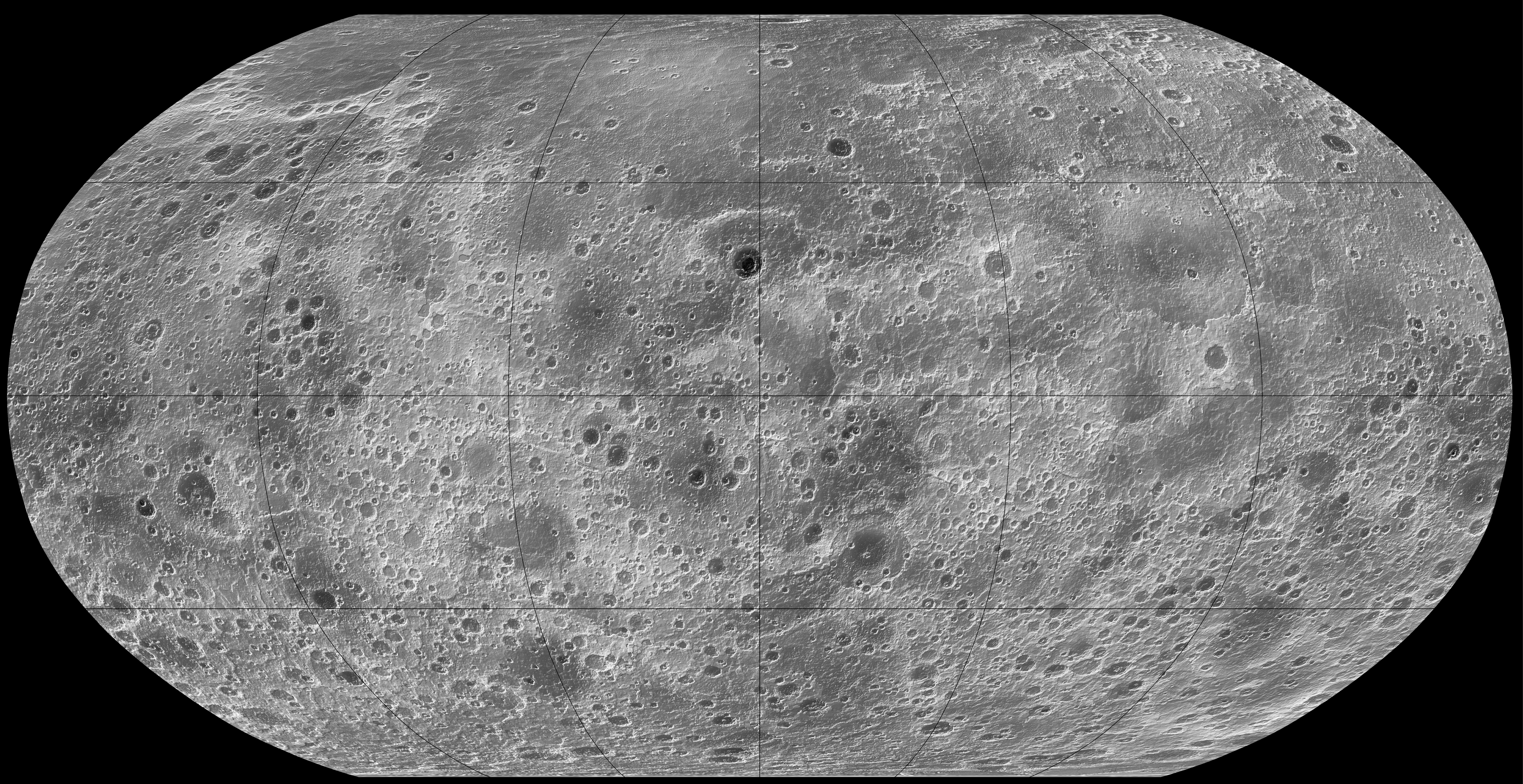
Luna
This map is intentionally not centered on the near side of the Moon in order to highlight the depth of the giant Aitken basin on the far side (lower left) that we aren’t as familiar with. This uses the LDEM_shape_pa dataset (order 11519 harmonics), and the Scientific colour map GrayC_20.

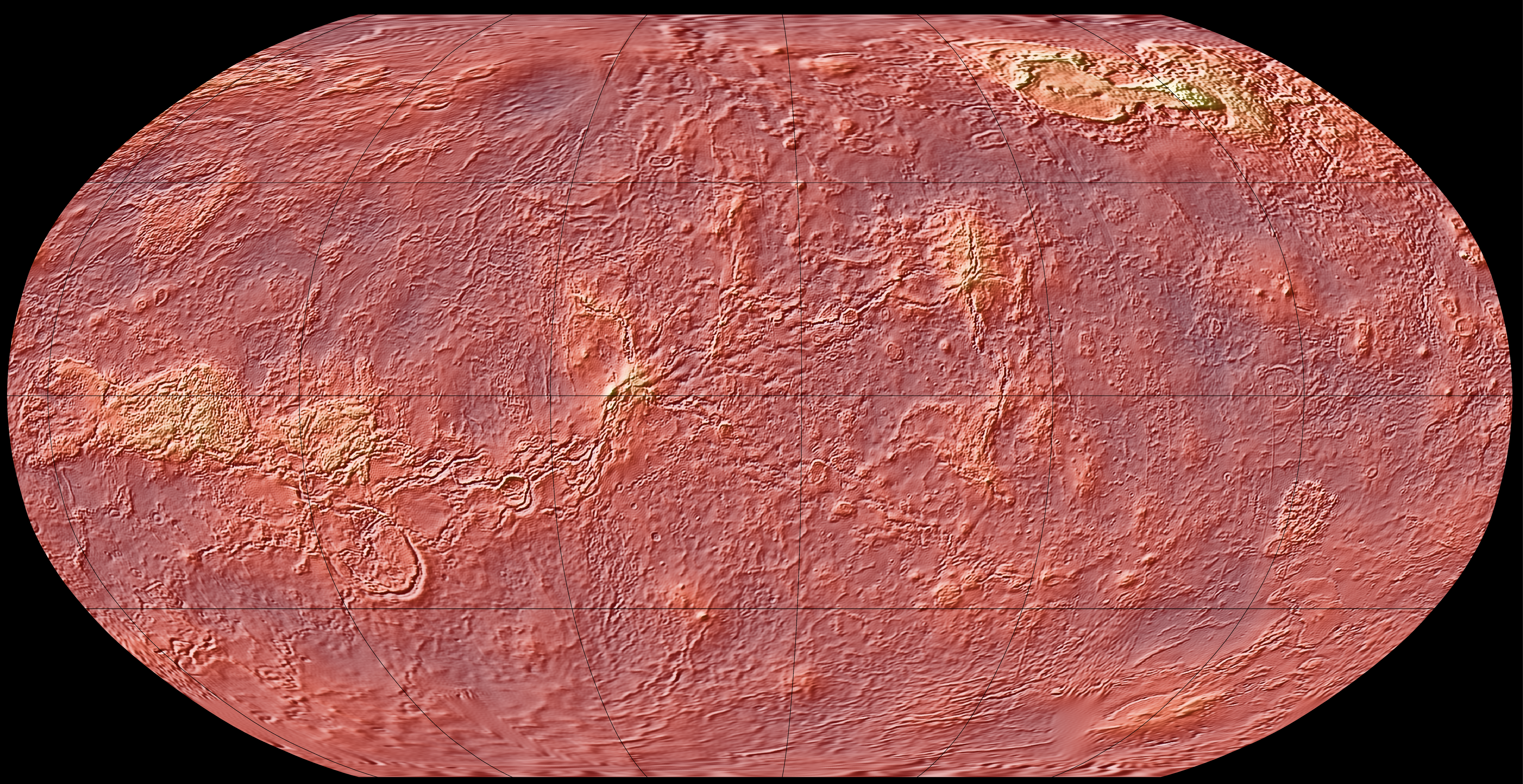
Mars
This uses the MOLA_shape data (order 5759 harmonics), and a custom color map composed of shades believed to represent actual Martian rocks (hexcodes #f0e7e7, #d2976d,#c67b5c,#99857a,#8e6a5a,#725130,#663926,#451804). The colors aren’t seen where they would be in a visible image of the planet, but the map does convey some “Marsiness” while also emphasizing the toplogy. The large volcanos and the Hellas crater in the south really pop out in elevation. Some major drainages also come through.